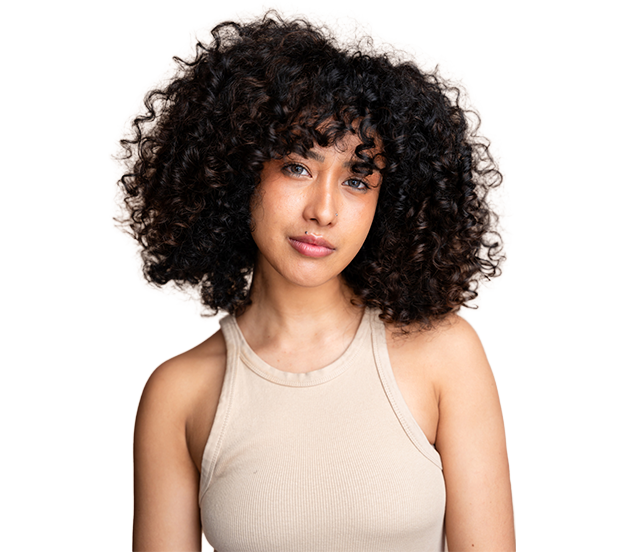



Frizz in curls often feels like a slight change of mood in the mirror: you've styled your curls with love - and yet suddenly there's this fluffy halo around your head. But when curls get frizzy, it's not a sign of 'incorrect' care or 'difficult' hair. It's more like a quiet whisper from your curls: Hey, I'm missing something right now. They usually want moisture, protection or simply a little more rest in everyday life.
That's exactly why we're taking a look together now: What frizz in curls really is, why curls like to react to it so much and what steps will help you to get your curls soft, defined and relaxed again - without stress, without product overload. Your curls can be alive. We're just bringing order back to the tangle.
What is frizz in curls - and why do you suffer from it?
Frizz is like a fine veil of small, protruding hairs that covers your curls. Suddenly they look less defined, more "fluffed up" or dry - even though you've actually given them love. In essence, what happens is this: The outer cuticle layer of your curls is no longer smooth. Think of it like pine cones: When they open up, everything looks rougher. This is exactly when moisture has an easy time of it - it rushes in and out as it pleases. And your curls react to this by frizzing, flying and poofing.
Why does this happen to you so quickly? Because curls naturally take a different path to straight hair. Their spiral shape makes them wonderfully lively, but also more sensitive. The natural oils from the scalp have a harder time reaching the ends. This means that curls are thirsty more often. And when they're thirsty, they get moisture from the air - whether you want them to or not. Voilà, frizz.
Important: Frizz is not a "fault". It's more of a signal. Your curls are telling you: I need more moisture. Or protection. Or both.
Why are curls so prone to frizz? The most common causes of frizz
Curls are little artists - they dance, jump and do their own thing. That's exactly what we love. But this lively texture also has a sensitive side. Because your hair doesn't fall straight down, but grows in curves, the surface dries more quickly. The natural oils often don't make it to the ends on the curved path. This means that curls are generally thirsty more often. And where there is thirst, frizz is not far away for curls.
Here are the most common triggers - no drama, just honest:
1. too little moisture in the hair
This is the classic cause of frizz. When your curls are dry on the inside, the flakes on the outside open up. Your hair becomes rougher and sucks moisture out of the air. Result: frizz, poof, unrest.
2. weather & humidity
When frizz is caused by humidity, dry hair attracts water, swells and frizzes. In winter, the opposite happens: heating air dries out your curls - and they also react with frizz.
3. friction in everyday life
Frizz loves anything that rubs: terry towels, cotton cushions, scarves, hoodies, even your fingers if you're constantly rummaging through your curls. Friction makes the hair surface stand up - and frizz dances along with it.
4. heat without protection
Blow-dryers on full power, straighteners, curling irons: heat removes moisture and makes hair more porous. Curls in particular notice this immediately.
5. chemical treatments & incorrect care
Bleaching, coloring or aggressive shampoos roughen the cuticle layer. Too hot water or too frequent washing will also put your curls into "thirst mode". And thirst means: frizz in curls.
Step by step: How to prevent frizz in curls in everyday life
If you want to avoid frizz in your curls, you don't need 12 products or perfectionism. You need a little routine that suits you - like a loving ritual that protects your curls and gives them enough to drink.
1. wash gently (not too often)
Washing too often can make dry curls frizzier because it washes away the natural oils. Wash every few days instead. Co-wash or low-poo is often a gentler way than high foaming shampoos.
2. care, care, care
Conditioner is a must. It smoothes the surface - exactly where frizz occurs. Apply a mask once a week. Moisture for curls is like water for plants: without it, it gets frizzy.
3. leave-in as a moisture anchor
Your leave-in conditioner is applied directly after conditioning. It is particularly helpful for frizz after washing because it retains moisture in the hair.
4. styling in layers (less is more)
First leave-in, then a light curl cream for shape, and finally (if you like) a gel or foam. This creates an anti-frizz routine for curls that locks in moisture. Goal: Define curls without frizz - not frizzed, but naturally beautiful.
5 Dry correctly - without stress
Frizz loves friction. So don't rub it. Gently press out your curls with a T-shirt or microfiber towel. If you blow-dry, do so with a diffuser and not too hot. This helps to reduce frizz without disturbing the structure.
6. hands off until everything is dry
If possible, do not touch during the drying process. Only when everything is dry, carefully loosen or knead the Gelcast.
7. refresh instead of rewash
In the morning, knead in a little water or refresh spray, a touch of leave-in or cream - and you're done. Your curls will come back together.
If you do this regularly, you will get to the root cause of frizz: a lack of moisture for curls and too much friction.
These products & ingredients really help your curls against frizz in curls
Frizz help is not about "more", but about "more suitable". Your curls need two things: moisture in and moisture out.
- Moisture first: Curls love ingredients that bring water into the hair: Aloe vera, glycerin, panthenol or honey. They replenish the hair from the inside and help to reduce frizz.
- Then seal: Moisture without protection is like rain without a roof. Light oils or butters act like a protective film around the hair. A few drops of anti-frizz hair oil are often enough to smooth flyaway hairs and add shine.
- Leave-in as a base: A good leave-in conditioner is the anti-frizz anchor in everyday life. It keeps curls supple, especially if they are frizzy after washing, instead of them "rising" again straight away.
Stylers for definition: Gels or foams hold bundles of curls together - especially when frizz is caused by humidity. They act like a soft hug that protects your curls without locking them in.
Mini compass:
- curls feel dry → more moisture for curls
- they are soft but fluffy → seal better afterwards
- Frizz only in the rain → Styler as a weather shield
What else you need to know about frizz in curls - little aha moments for great calm
Sometimes frizz drives us crazy because we think "everything is broken" now. But it's often less drama than it feels.
- Frizz is not always a problem: a little fluff belongs to curls like spring belongs to Zurich. If your curls are healthy and bouncy, frizz can also play a part.
- Porosity makes all the difference: some curls drink up moisture quickly and lose it fast - then frizz comes sooner after washing. Others take longer, but stay calmer. Adapt your anti-frizz routine for curls accordingly.
- Summer vs. winter frizz: Frizz in summer is often caused by humidity, frizz in winter by dryness. Depending on the season, your care can be a little lighter or richer.
- Avoiding frizz in curls does not mean "controlling" them: the more you fight your curls, the more they rebel. Support brings calm - and definition.
- Home remedies only selectively: A little oil can help, but too much makes it difficult. The aim remains: Define curls without frizz, don't "smear it all over".
- Routine beats SOS: If you want to reduce frizz, a constant, loving routine is more effective than individual emergency actions. Your curls will remember how you treat them - and will eventually respond with calm.
Conclusion: Your curls can be free - just not thirsty
Frizz in curls is not a sign that you are doing something wrong. It's a reminder: more moisture, more protection, more softness. If you know the cause of frizz, frizz relief is simple: wash gently, condition well, lock in moisture and leave to dry. This way you can reduce frizz without complicating your routine.
And the best thing: You don't have to "control" your curls to experience curl definition without frizz. You simply support them so that they can show their softest, calmest side - vibrant, shiny and completely you.
Ready to make your curls feel lighter again?
If you want an anti-frizz routine for curls that really suits your hair, let's look at it together. It often only takes a few small adjustments - and your curls will thank you with calmness, bounce and less frizz in curls.